
- By admin
- Insurance, Residential Roofing, Storm
- 0 Comment
From Shingles to Standing Seam: Upgrading Your Roof After Hail Damage
If hail just totaled your shingle roof, you don't have to replace it with the same thing. A standing seam metal roof may be the last roof you ever put on your home.
Standing Seam · Metal Roofing · Hail UpgradeHail damage is frustrating, but it carries an unexpected upside: insurance-approved roof replacements give you the opportunity to upgrade, not just restore. For Texas homeowners who are tired of filing claims every few years when another storm rolls through, a standing seam metal roof changes the equation entirely. It's a different category of product than an asphalt shingle, with a different lifespan, a different performance profile, and a different long-term cost. This guide will walk you through everything you need to consider: starting with your existing decking, moving into how a standing seam system is built, and finishing with a clear picture of why so many Texas homeowners are making the switch for good.
Inspecting the Existing Decking System
Whether you're going back with shingles or upgrading to metal, the first order of business before any new material goes on your roof is a thorough inspection of the decking beneath. Your roof decking is the structural substrate that everything fastens to: oriented strand board (OSB) or plywood panels nailed across your rafters. Hail rarely damages decking directly, but years of an aging, leaking, or poorly ventilated shingle system absolutely can.
A standing seam metal roof is engineered to last 25 to 75 years on a residential structure. Installing it over compromised decking defeats the entire investment. Every qualified contractor should complete a full deck inspection during tear-off, and no new material should be installed until the deck is sound.
What the inspection should cover
- Soft spots and rot: A contractor walking the deck during tear-off will probe for spongy or soft areas indicating moisture damage or wood rot beneath the surface. These sections must be replaced before any underlayment or metal panel is installed.
- OSB delamination and swelling: OSB that has absorbed moisture over time swells, separates, and loses its ability to hold fasteners. Standing seam panels are fastened with concealed clips that require a solid substrate; delaminated decking is a serious problem in this system.
- Panel spacing and expansion gaps: Decking panels require a 1/8-inch expansion gap at all joints. Missing gaps can cause buckling as panels expand in Texas heat, creating an uneven surface that shows through even metal panels.
- Rafter alignment and fastener holding: Metal roof clips must engage solid framing. Areas where decking has pulled away from rafters or where rafters are spaced beyond design tolerance need to be corrected before metal installation proceeds.
- Mold, staining, and ventilation evidence: Dark staining or mold on decking surfaces signals a long-term moisture problem, typically caused by inadequate attic ventilation. This must be corrected at the source before re-roofing; otherwise the new roof will face the same conditions from day one.
- Deck flatness and surface quality: Standing seam metal panels reveal surface irregularities more than shingles do. A flat, even deck is more critical here; any high spots, protruding nail heads, or rough joints should be addressed before underlayment is installed.
Request that your contractor photograph all decking replacement work during tear-off with timestamps. For insurance-funded replacements, these photos support any supplement requests for deck repair or replacement. For your own records, they document what was done before everything was covered back up for the next several decades.
Texas building codes require that replacement decking match the thickness and grade of existing material. A reputable contractor will ensure decking is a solid surface before the new roof system is applied.
Understanding the Standing Seam Metal Roof System
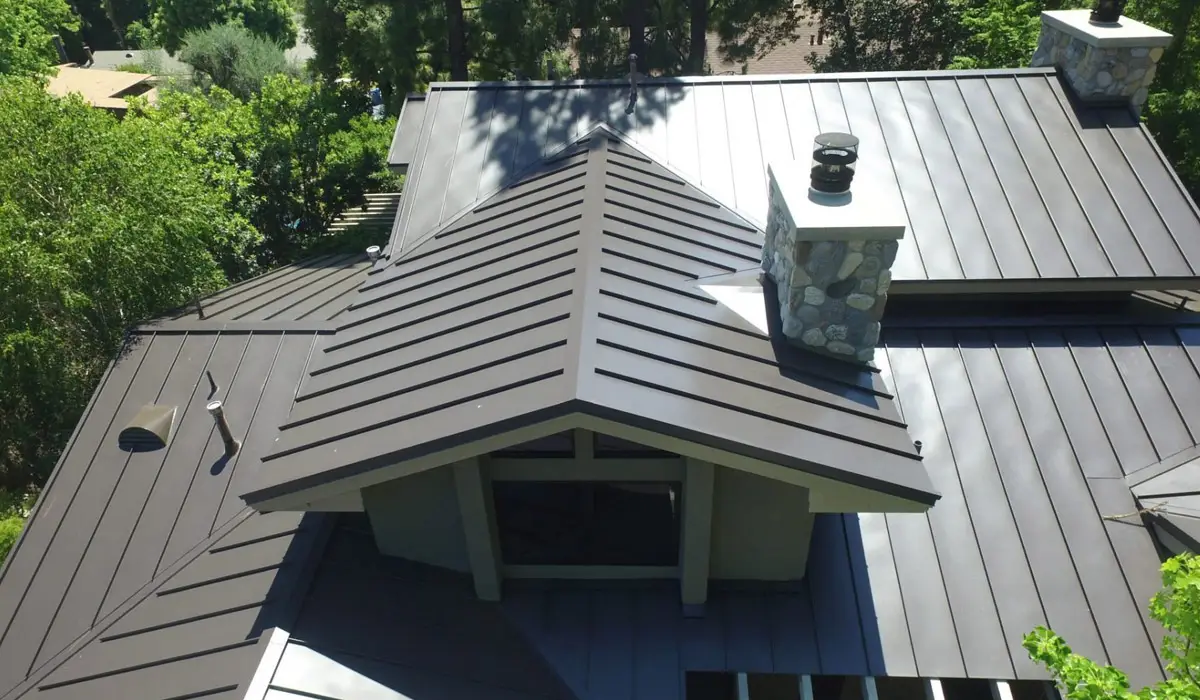
Standing seam is a specific type of metal roofing: panels run from the ridge to the eave with raised seams connecting each panel to the next. Those seams, which stand 1 to 2 inches above the panel surface, are the defining feature of the system. They are either mechanically seamed (folded together with a seaming tool) or snap-locked (clicked together by hand), creating a weathertight, fastener-free surface with no exposed screws anywhere on the roof field.
This is a fundamentally different construction philosophy than exposed-fastener metal roofing or asphalt shingles. There are no nails or screws penetrating the weather surface; instead, concealed clips attach to the panel legs and are fastened to the decking beneath, allowing the panels to expand and contract with temperature changes without stressing the fasteners or opening up gaps.
Texas roofs see extreme temperature swings: a metal panel can move through 150 degrees of expansion and contraction in a single day during summer. Exposed fasteners compress rubber washers on the upstroke and pull away from the deck on the downstroke. Over time, those fasteners back out and leak. Concealed clip systems float the panel over the fastener, eliminating that failure mode entirely.
Anatomy of a standing seam system
Panel materials and coatings
Residential standing seam panels are most commonly manufactured from 24-gauge or 26-gauge Galvalume steel (an aluminum-zinc alloy coating over steel). Galvalume steel is the most widely specified material for Texas residential applications; it combines high strength with excellent corrosion resistance and is available with a wide range of factory-applied paint finishes.
Paint systems matter significantly in the Texas climate. For example, many quality standing seam roofs will carry a Kynar 500 finish. This is a coating that will resist UV degradation, chalking, and fading far better than polyester alternatives. Look for a product that carries a paint warranty alongside its structural warranty.
Metal roofing with a reflective or "cool roof" paint finish can qualify for Energy Star certification and may be eligible for federal energy efficiency tax credits. In Texas's intense summer climate, a Kynar-coated reflective panel can meaningfully reduce attic heat load and lower cooling costs. Ask your contractor which color options carry the Energy Star certification for your region.
Snap-lock vs. mechanically seamed panels
Residential standing seam installations most commonly use snap-lock panels, where the panel legs click together under hand pressure during installation. Mechanically seamed systems use a powered seaming tool to fold and lock the seams after panels are placed, creating a tighter weather seal; these are more common in commercial applications and steeper-pitched residential roofs in very high wind zones.
For most Texas residential applications, a properly installed snap-lock system with a continuous clip and a quality sealant at penetrations and terminations will perform excellently. Your contractor should specify the panel profile, clip type, and seam style in writing so you know exactly what is being installed.
Standing seam metal roofing requires trained installers. Improperly engaged clips, incorrect panel alignment, or poor flashing details can compromise a system that should last 50 years. Ask your contractor specifically about their metal roofing installation experience, and request references for completed standing seam jobs you can physically inspect before committing.
The Benefits of Standing Seam Roofing for Texas Homeowners
The upfront cost of a standing seam metal roof is higher than an asphalt shingle replacement. That's simply true, and any contractor who tells you otherwise isn't being straight with you. But when you look at the full picture over the realistic lifespan of the system, the cost story changes significantly. Here is what you're actually buying.
Longevity that outlasts the mortgage
A quality standing seam metal roof, properly installed and maintained, carries a design life of 40 to 70 years. An architectural asphalt shingle roof in the Texas climate realistically lasts 15 to 25 years depending on exposure, attic ventilation, and storm activity. Over a 50-year ownership horizon, that's potentially two additional shingle replacements avoided, each with its own material and labor cost.
Hail and wind resistance
This is the benefit most Texas homeowners ask about first, and for good reason. A 24-gauge Galvalume standing seam panel will typically achieve a Class 4 UL 2218 impact rating, the highest rating available, meaning it resists significant hail penetration under standard test conditions. Many Texas insurance carriers offer a premium discount of 15 to 30 percent for Class 4 rated roofing products; verify with your carrier before installation and submit documentation upon completion to update your policy.
Wind resistance is equally impressive. A properly installed standing seam system with continuous concealed clips can oftentimes withstand wind speeds exceeding 160 mph in tested configurations, far above what asphalt shingles can achieve with standard fastening patterns.
Lifespan
25 to 75 years with minimal maintenance; two to three times the service life of asphalt shingles
Impact Resistance
Class 4 UL 2218 rating on most 24-gauge panels; potential insurance premium discount of 15 to 30 percent
Wind Performance
Concealed clip systems tested to 160+ mph; no exposed fasteners to back out or create leak points
Energy Efficiency
Reflective Kynar finishes reduce solar heat gain; Energy Star-qualified options available for Texas climate zones
Low Maintenance
No shingles to crack, cup, blow off, or lose granules; no exposed fastener washers to replace every 10 years
Home Value
Metal roofing consistently ranks among the highest ROI exterior upgrades in national remodeling surveys
How it compares to asphalt shingles
| Category | Standing Seam Metal | Architectural Shingles |
|---|---|---|
| Design Lifespan | 25 to 75 years | 15 to 25 years |
| Hail Resistance (Class 4) | Standard on 24g | Available, not standard |
| Granule / Surface Loss | Not applicable | Ongoing throughout life |
| Reflective Finish Options | Full Kynar palette | Limited cool-roof options |
| Upfront Material Cost | Higher | Lower |
| 50-Year Total Cost | Typically lower | 2 to 3 replacements |
Working with your insurance carrier on an upgrade
If your carrier has approved a shingle replacement due to hail damage, they will typically pay the actual cash value or replacement cost value for a like-kind-and-quality shingle replacement. To upgrade to standing seam metal, you would pay the cost difference above that approved amount out of pocket. This is a common arrangement and a straightforward conversation to have before your claim is settled.
Some homeowners choose to use the insurance proceeds toward the base replacement and absorb the upgrade cost as a direct investment in the home. Given the longevity and insurance discount benefits a Class 4 metal system can provide, many find the math works clearly in their favor over a 10 to 20 year window.
If you're considering an upgrade, have your contractor assess the roof and provide a quote for the metal system before your insurance adjuster visit. That way you have pricing in hand when the conversation about upgrade cost differences comes up, and you won't be making a decision under time pressure after the claim is already settled.
A Roof You Won't Have to Think About for Decades
The path from a hail-damaged shingle roof to a standing seam metal system follows a clear progression: a thorough decking inspection to make sure the foundation is sound, a properly installed concealed-fastener panel system built on the right underlayment with quality trim and flashings, and a Kynar-finished product rated for Class 4 impact and Texas wind loads.
Done right, you get a roof that will still be performing when your grandchildren inherit the house. No more storm-season anxiety. No more granule accumulation in the gutters. No more insurance claims every five years when the next hail event rolls through.
Sound Foundation
A fully inspected, repaired deck that gives the standing seam system the substrate it needs to perform for 50-plus years
Engineered System
Concealed clips, high-temp underlayment, and Kynar-coated panels installed by trained metal roofing specialists
Long-Term Value
Class 4 impact rating, potential insurance discounts, reduced maintenance, and a lifespan that outpaces every alternative